A Refusal of Easy Access
A conversation with Rajee Samarasinghe about colonial archives, state violence, and enforced disappearance in Sri Lanka, reflecting on testimony, surveillance and the limits of cinema’s ability to make another person’s grief visible.
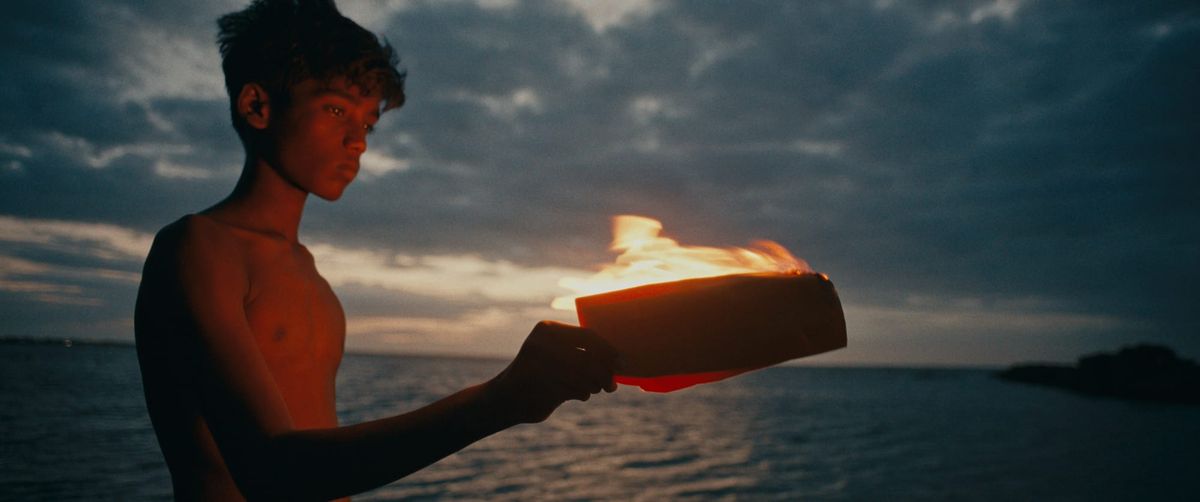
In Rajee Samarasinghe’s films, images rarely offer easy access to the places they depict. Landscapes, rituals, domestic spaces and sites of labour resist becoming legible as self-contained cultural objects. They are already mediated by cameras, archives and institutions that have framed, classified and circulated them for particular ways of seeing.
This tension runs through his early short films. In If I Were Any Further Away I’d Be Closer to Home (2016), everyday life in his mother’s village is observed with restraint, without being reduced to folkloric spectacle or social document. The Spectre Watches Over Her (2016) approaches ritual through its already dense visual history: anthropological description, theatrical staging and modernist exoticism. In Foreign Quarters (2017), bodies, machines and industrial sound produce an environment in which labour registers both as an everyday rhythm and as a disciplinary regime.
These films do not outright reject the ethnographic image, understood here as a way of turning communities and practices into objects of cultural observation. Rather, they make it unreliable. Samarasinghe is concerned not only with what we see, but with the conditions under which something becomes visible: who stands behind the camera, what can be explained, what remains inaccessible, and how ritual or landscape may be rendered as convenient spectacle. These concerns shape the material language of his work: grainy images, shifting textures, interruptions, associative editing, and a fluent movement between documentary record, archive and staging.
In Your Touch Makes Others Invisible (2025), these questions take on a different urgency. Samarasinghe’s feature debut addresses enforced disappearances at the end of Sri Lanka’s 26-year civil war, combining an allegorically constructed narrative with testimonies from Tamil women searching for their disappeared sons. Here, the focus shifts towards the ways the state and Sinhala majoritarianism, a political logic that places Sinhala and Buddhist identity at the centre of the nation, has disappeared people and rendered the remaining ones, their histories and culture publicly unrecognisable even as they remain materially present.
Samarasinghe does not seek an image that might compensate for disappearance, restore the missing, or turn another person’s loss into conclusive evidence. His cinema remains with interruption: with landscapes where traces of violence seem to have been erased but memory has not; with testimony that must be heard without being exhausted; and with staging that does not replace reality but exposes the limits of representation.
This conversation with Rajee Samarasinghe begins there: with the colonial archive and postwar denial, with the camera as both an instrument of observation and a limited means of approaching another person’s pain, and with landscape as both image and a bearer of what cannot be fully seen.
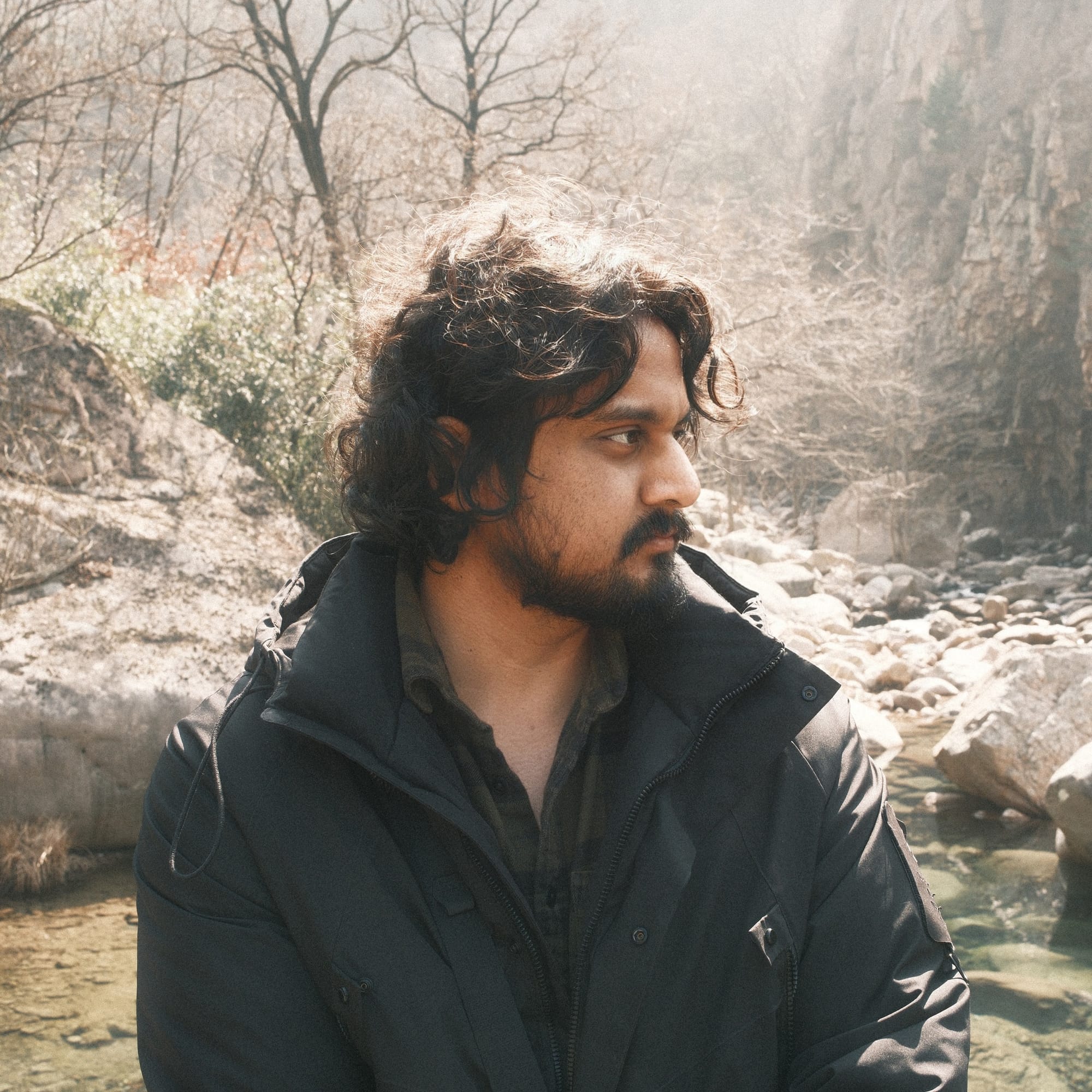
I would like to start with the relationship between your early shorts and Your Touch Makes Others Invisible. There is a distinct shift in how observation, documentation, and the production of knowledge function across these works. While the early films often engage with the historical, external gaze of the colonial ethnographer, Your Touch confronts the internal mechanisms of the Sri Lankan state and the ethnic majority, deploying the motif of invisibility to map the material history of enforced disappearances. In this framework, the state executes its violence entirely from within, operating without needing an outside viewer. How did your understanding of this gaze evolve between these projects? Was the transition from confronting colonial archives to examining domestic state violence a gradual realization in your practice, or was it catalyzed by a specific event, text, or material encounter?
It’s true, the earlier films were very much concerned with the colonial archive, ethnography, and the historical production of knowledge around Sri Lanka. I always knew I would eventually have to confront this issue of state violence very directly but I had to work toward it. It’s an incendiary topic and a difficult film to realize politically, ethically, formally, logistically, and also internally so I needed to know that I could actually approach it with the necessary care. In retrospect, the short films were gradually leading me there not only conceptually but also as a human being and filmmaker. There was also a kind of timeline to it. Before I could approach the more immediate question of domestic state violence I felt I had to first pass through the question of colonialism and the various forms of meddling and knowledge production that shaped the country long before the war. So the earlier work helped me understand the historical ground from which the later violence emerged. With my shorts, I was interested in how the island had been looked at, categorized, aestheticized, and made legible through external systems of power. Those films often begin with the problem of looking. What kinds of knowledge looking produces and what forms of violence are hidden inside that production of knowledge. With Your Touch Makes Others Invisible that question shifted inward. The violence was no longer only about an external colonial gaze but about the state, the ethnic majority, and the structures of denial that operate from within the country. As a Sinhalese filmmaker, this was not an abstract move for me. It meant implicating myself in a different way. The film had to confront not just how Sri Lanka had been seen by outsiders but how the country sees and does not see itself. The motif of invisibility became a way to think about enforced disappearance but also about willful non-recognition. The ways people, histories, and violence can be made absent even while they are completely present.
A notable aspect of your short films is that while much of the raw footage was captured around 2010 (immediately following the end of the civil war), the completion dates of these projects span over a decade. Looking closely at this timeline, the films you finished earlier in your career feel deeply occupied with the historical legacy of ethnography and the colonial gaze. Conversely, the films you completed years later shift into a direct confrontation with the state, the war, and their lingering trauma on the population. Since this progression occurred during the long-form processing of the same historical archive, how did your relationship to that 2010 footage change over the years? What did the prolonged duration of the editing and construction process allow you to see about the state's influence that was not the primary focus when you first began completing the earlier works?
My relationship to the 2010 footage definitely changed over time. When I first shot it, the war had just ended and I was still pretty young both as a person and as a filmmaker. I think I was aware that the material was politically charged but I did not yet know how to approach it directly. I figured if I never figured it out and never put it all together then at least they were “home movies” that I’d have. The earlier short works allowed me to move around the footage obliquely through questions of colonialism, ethnography, ritual, landscape, and the production of knowledge. I suppose that was a necessary path for me. Over time, the footage became less about what was visibly present and more about the forces organizing what could not be shown or said. The state became legible to me not only through direct images of militarization but through atmosphere, silence, avoidance, choreography, fear, routine, the way people moved through space, the way certain histories were present precisely because they had been suppressed. The long editing process allowed the footage to become strange to me and that distance was important. I could see that the state was not merely a subject to be represented but a structuring force already embedded in the material. So the later work was a return to the same footage with a different capacity to see it. The footage had always contained the afterlife of the war but I guess I needed time and the detour through the colonial archive to understand how to formally and ethically confront it.
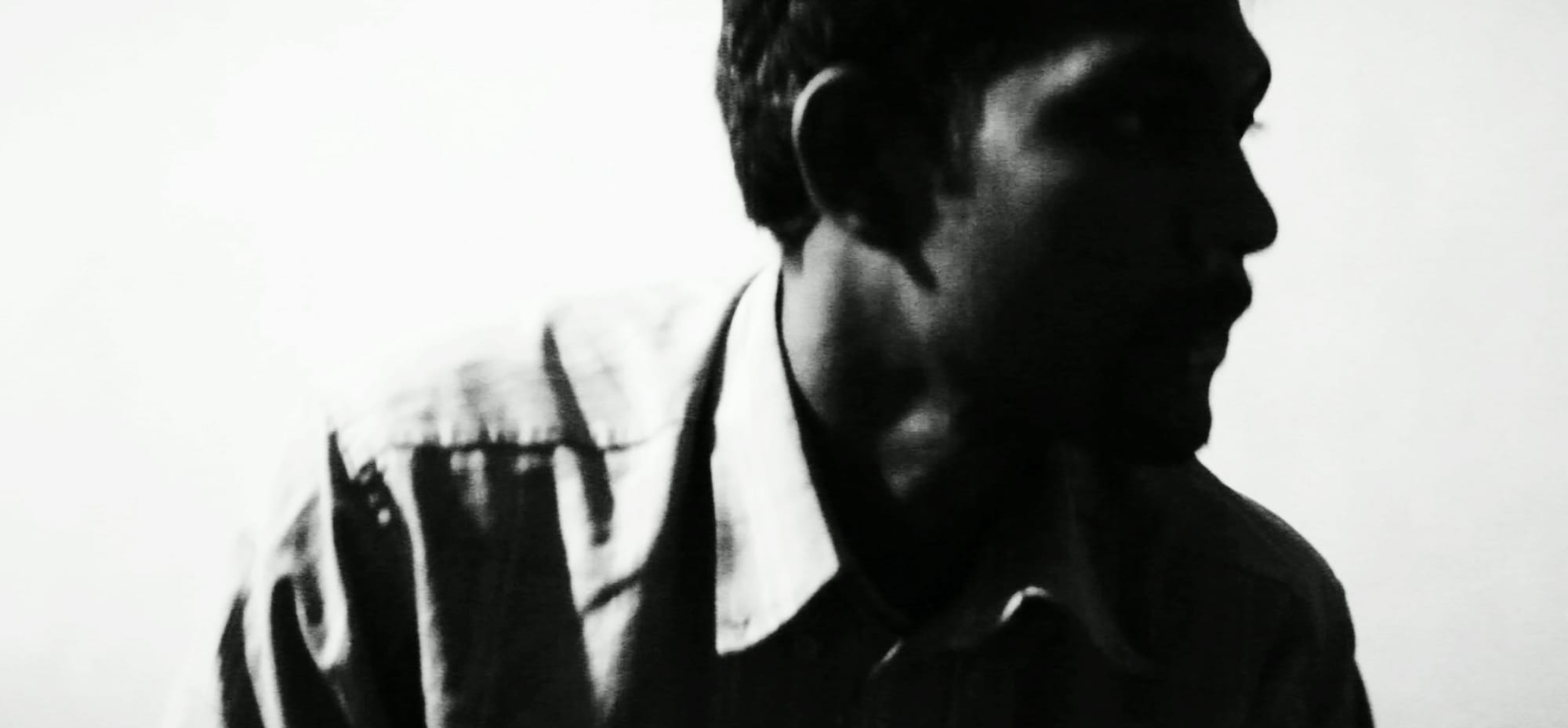
I keep going back and forth on The Spectre Watches Over Her. On one hand, restaging the Sanni Yakuma exorcism to directly engage with Paul Wirz’s anthropological text feels like a material act of historic de-centering. On the other hand, the title invokes Gauguin’s Manao tupapau, an artwork deeply entangled with a predatory, European voyeurism that exoticizes the colonized body through tropes of “primitive” terror. By invoking Gauguin, you seem to complicate any simple notion of cultural reclamation, linking the clinical gaze of the anthropologist with the fetishizing gaze of the modern artist. How do you navigate the friction between the physical act of restaging this intimate ritual and the heavy intertextual weight of that title? Was using Gauguin a way to acknowledge that the work cannot exist entirely outside of these historical complications?
For me The Spectre Watches Over Her was never a straightforward act of reclamation. I was interested in restaging or re-encountering the ritual through the shadow of Paul Wirz’s anthropological writing but I also did not want to pretend that what I was doing could somehow purify or undo the historical violence of that gaze. The Gauguin reference is important because it contaminates the work in a sense. It brings in the fetishizing and voyeuristic gaze of modern art alongside the clinical gaze of anthropology. So yes, invoking Gauguin was a way to acknowledge that the work cannot exist outside of these historical complications. The title places the film in a compromised field. I’m not returning to a ritual and restoring it to some authentic origin. I’m approaching it through layers of mediation, projection, violence, and misrecognition. That friction is part of the film.
The depiction of labor undergoes a distinct transformation across your films. In If I Were Any Further Away I'd Be Closer, work appears integrated into the rhythm of daily life. In Foreign Quarters, it shifts toward a mechanical alienation, where the human body begins to look like an extension of the machinery. By the time we reach Your Touch Makes Others Invisible, everyday economic labor is shadowed by political terror: the women at the factory are transported in a white van (the type of vehicle associated with state abductions and enforced disappearances). This juxtaposition injects a deep sense of precarity into an otherwise ordinary scene of work. How do you view the relationship between daily economic survival and state violence in Your Touch, and how did your approach to filming labor change as your work became more explicitly political?
That’s true of those two shorts. I think it just depends on the concept and context. With Your Touch, labor is no longer separable from political terror. Ordinary economic survival takes place inside the afterlife of war. The factory scene with the white van is important in that way. The van carries a very specific historical terror in Sri Lanka but the scene also shows how that terror can enter an ordinary commute, an ordinary workday, an ordinary movement from one place to another. I’m interested in how political violence does not only happen in spectacular moments. It reorganizes everyday life. It changes the atmosphere around labor, travel, silence, waiting, and routine.
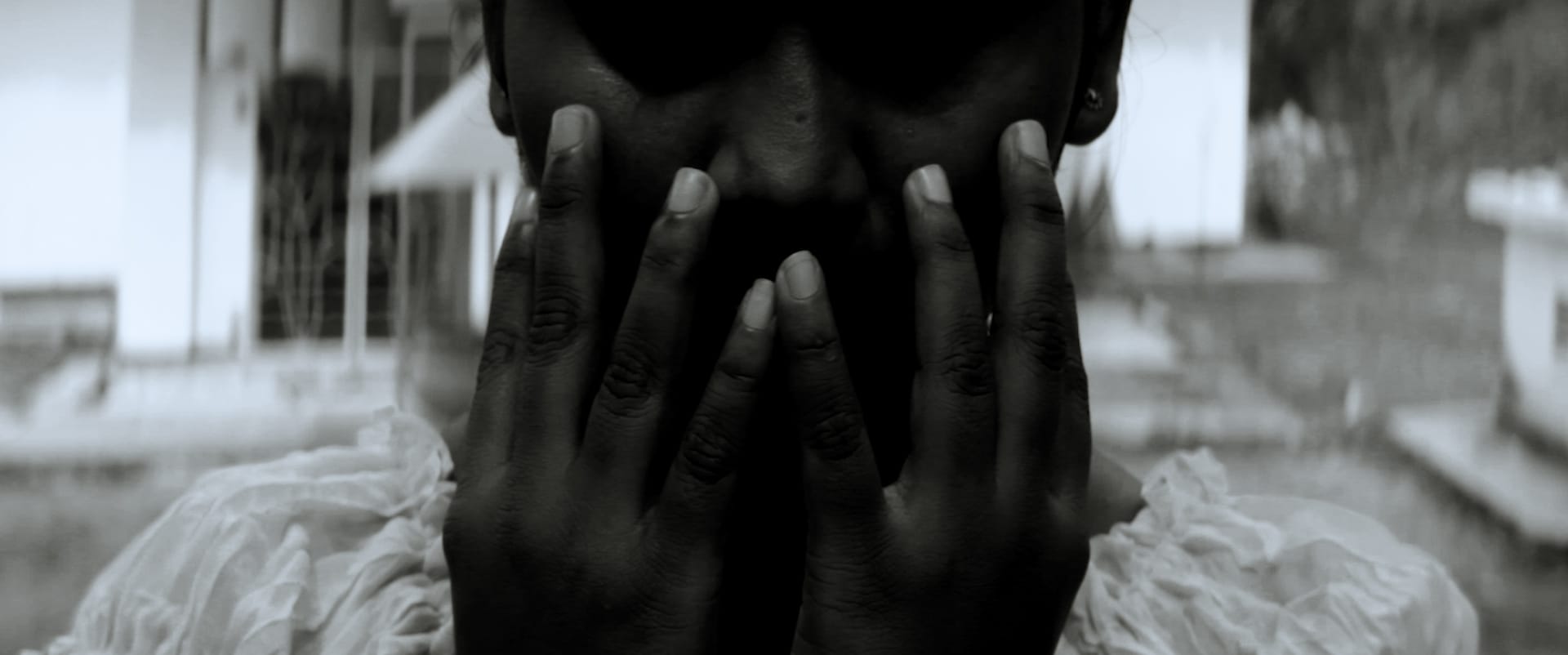
This formal pattern extends in another sequence, where a woman eating ice cream sits next to a CRT TV showing a scene of state violence. By holding these two distant moments (ordinary consumption and political trauma) next to each other, it seems to me that the film treats them as part of a single, continuous condition. Could you unpack the structural logic behind repeating this specific composition? How does this formal choice speak to the way state violence reconfigures even the most mundane, silent spaces of everyday life?
For me the composition was a way of refusing to separate the ordinary from the catastrophic. They might seem to clash but in Sri Lanka they coexist. They’re entangled. One doesn’t cancel the other out. The mundane continues. Consumption continues. Daily life continues. And yet the violence is there and sometimes absorbed into the background, sometimes mediated through screens, sometimes silently sitting beside the body.
There is a formal divide in Your Touch Makes Others Invisible between the highly rigorous control of the staged scenes and the loose, open quality of the mothers’ testimonies. Given that the film was shot clandestinely under a heavy post-war military presence in Northern Sri Lanka, this rigid staging feels almost like a reflection of the political environment. How much did the physical reality of the military occupation influence this formal split? What dictated the boundaries of this staging when working with locals under the state’s gaze?
The physical reality of filming in the north influenced that formal split completely. It wasn’t only an aesthetic decision, it was also a practical and political necessity. The fictional elements were written very carefully so that they could function allegorically, pointing toward the enforced disappearances while still hiding in plain sight. The script that went through official channels for approval was essentially the fictional elements of the film with the nonfiction elements removed. So from the beginning, there was a double structure. The fictional elements had to be legible enough to function as some kind of approvable film or story but it only fully revealed itself in relation to the documentary elements namely the testimonies. The staged scenes were monitored closely by the military and they were especially attentive to how the military were being represented. So those scenes had to be very precise and carefully calibrated and I knew that. The testimonies were different. Those were filmed when we felt we had enough space to work without being surveilled. That difference in production conditions became embedded in the form of the film. So the divide between the precise staging and the looser and more open testimonies was both intentional and necessary. The fictional scenes are constrained because they were made under constraint. The testimonies, by contrast, feel like they are bursting through the seams of the film. I knew the film would end up formally unstable, even messy, but I wanted that. It is a messy and unresolved situation and I didn’t want the form to falsely resolve it. The instability of the film reflects the instability of the history itself.
I often think about the school scene in which children are reciting and memorizing as part of biology class, and a boy gets up, leaves, and slowly disappears without anyone paying attention, for us to follow him to a place in nature where he meets another boy and the two begin wrestling. It is a haunting sequence, both for its rhythm, but also because it feels like it brings the everyday discipline of South Asian schooling into the same space as the normalization of a disappearance. How do you view the relationship between that specific kind of institutional education (where memory is used as a tool for rote repetition) and the broader architecture of state control and erasure? How did you construct the staging and the soundscape to navigate the friction between a disciplined classroom and a quiet disappearance, and what does that specific transition demand of the viewer's own attention?
The school scene connects memory to disappearance in a direct but quiet way. I was thinking about education as one of the first places where the state shapes consciousness. Memorization, repetition, discipline, and obedience are not inherently violent of course but within certain political structures they can become part of a larger architecture of control as you put it. The boy leaving the classroom and slowly disappearing is staged almost as a rupture in attention. Nobody notices. That’s crucial. The scene is not only about disappearance as an event but about the social and institutional conditions that allow disappearance to become normalized. The transition asks the viewer to notice what the room does not notice. The soundscape works similarly. The classroom has a disciplined sonic order but when the boy exits, the sound and pace open up. That shift demands a different kind of attention from the viewer. It asks them to follow an absence before it has been named as one.
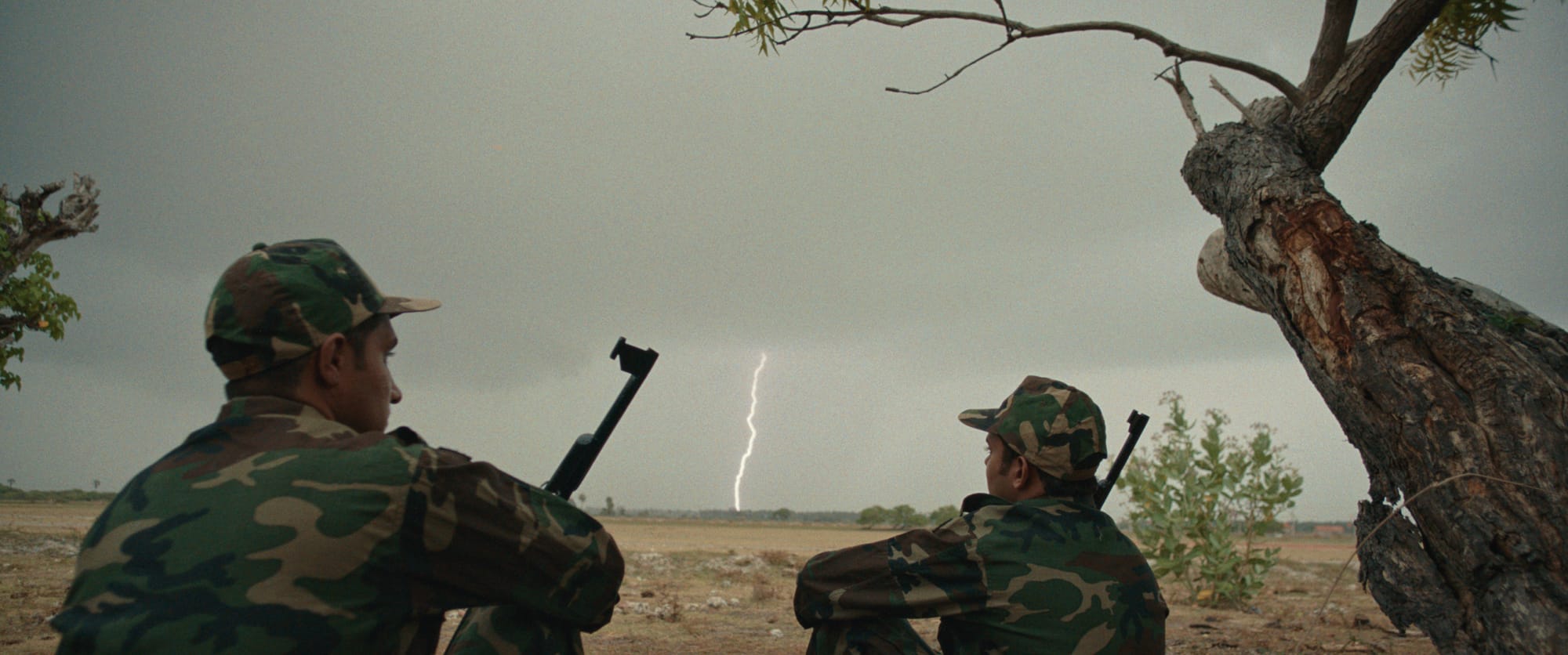
In another part of the film, a young soldier tells the camera that he is searching for a “colorful ghost,” his words operating as an ideological wish and a state mandate for the absolute eradication of the memory of what the state did in 2009. Immediately after, you stage his path crossing with a tourist couple, forcing a spatial collision between two irreconcilable versions of Sri Lanka: one of violence and control, the other of beauty and leisure. When you engineered this specific collision, forcing these mutually exclusive topographies onto the same patch of ground, how did you calculate what that meeting would do to the weight and structure of the rest of the film? How does this staging interrogate the way state violence successfully fragments historical consciousness?
That encounter with the tourist couple has the connotation you’re describing but for me it was also pointing toward a larger indifference. Sri Lanka is often legible to outsiders primarily as a landscape of attraction. Beaches, temples, nature, tourism, a place to pass through or consume visually and then leave behind. Meanwhile, the violence that has shaped those same landscapes remains largely unseen or is treated as something peripheral. So when the soldier’s path crosses with the tourist couple, I wanted those two realities to briefly occupy the same ground. The landscape as a site of surveillance, disappearance, and unresolved history, and the landscape as an image of leisure for the outside world. With the “colorful ghost” line, the ghost becomes a figure for what cannot be fully erased. Memory, evidence, that sort of thing. Placing that search next to the tourists isn’t so much about contrasting violence and beauty. It is about how beauty can become a way of not seeing, especially when the rest of the world encounters Sri Lanka mainly as an aesthetic or touristic image. So that scene or collision is about how violence can remain present in a landscape even when the public image of that landscape has been reorganized around beauty, tourism, and forgetting. The same patch of ground can hold grief, denial, military presence, tourism, and fantasy all at once. The violence does not disappear, it’s just reorganized beneath another image of the country.
I want to look at the contrast between the public ritual scenes, which are dominated by men, and the private testimonies, which are carried entirely by the mothers. I am interested in how you navigated your own position while filming these two distinct spaces. You are a Sinhalese filmmaker who was educated within the structures of the American avant-garde, yet you are filming inside occupied Tamil communities. When documenting and staging the male-dominated rituals, how did your awareness of the Western art apparatus shape your formal approach to these practices? Conversely, when filming the mothers testifying to losses caused by the religious ethnonationalist state, how did this positionality dictate the choices you made regarding the camera's distance and your interaction with the people?
You could say that the ritual scenes might be historically vulnerable to being aestheticized by anthropology, tourism, and western art. And yes, given my own education within the American system, I was very aware that the camera could very easily turn those practices into images of cultural spectacle. So the challenge was not to pretend I was even necessarily outside that apparatus but to make the work uneasy with its own looking. I didn’t want the film to explain or possess the rituals ethnographically. The rituals were not meant to function as ethnographic evidence in that older sense. They had a different purpose. They became a way of connecting an individual testimony to a larger collective pain tied to ethnicity, religion, culture, and the historical violence that had passed through those communities. In the sequence where the ritual is interlaced with a mother’s testimony. The cutting back and forth was not meant to explain the ritual or to make it legible as cultural information. It was meant to create a relationship between private grief and a broader communal wound. The testimony gives us the specificity of one woman’s loss while the ritual opens that pain into something collective, historical, and culturally embedded. The testimonies required a different ethic. As a Sinhalese filmmaker filming Tamil mothers whose losses were caused by a Sinhalese-majoritarian state, I knew there was no neutral position available to me. It was about allowing the testimony to carry its own force while acknowledging that my access to that space was politically and ethically complicated from the beginning. From the very beginning of the film, I established that this was being made from my perspective, with all the limits and complications that entails. It points to the limits of access and the limits of the form itself.
I am very interested in the dual nature of the drone footage in Your Touch Makes Others Invisible. On one hand, the floating, weightless movement feels ghostly, as if the camera itself occupies the space of the disappeared. On the other hand, it feels also surveying, like it is searching a landscape that has been systematically cleared of evidence. This seems to connect the disappeared with the mothers who search for them (both groups share a condition of erasure, where the state's refusal to acknowledge the trauma becomes its own form of making people invisible). The nature we see has regrown from the violence inflicted in and on it, and from above, in the drone shots, there's nothing left to see. And yet the film keeps insisting the ground still holds something (memories, remnants, even ghosts). How did you approach using the drone (a tool traditionally associated with military surveillance) as an instrument for tracking this systemic invisibility? Furthermore, how did you conceive working with a landscape that simultaneously anchors the memory and buries it?
The drone obviously carries these associations with surveillance and militarization and I was aware of those implications. That was part of why I wanted to use it. From above, the landscape can appear calm, even empty, but that emptiness is part of the violence. Evidence has been buried, erased, absorbed back into the land or made unspeakable. So the drone became a way of looking at a place where there is seemingly “nothing” to see while still insisting that the ground holds memory. It can feel ghostly, almost spiritual, as if the camera is ascending into the sky or occupying a disembodied presence but it can also feel searching, surveilling, or militarized. It’s complicated. That tension felt essential to a film about disappearance, erasure, and mothers who continue to search in a landscape that refuses to give anything back clearly.
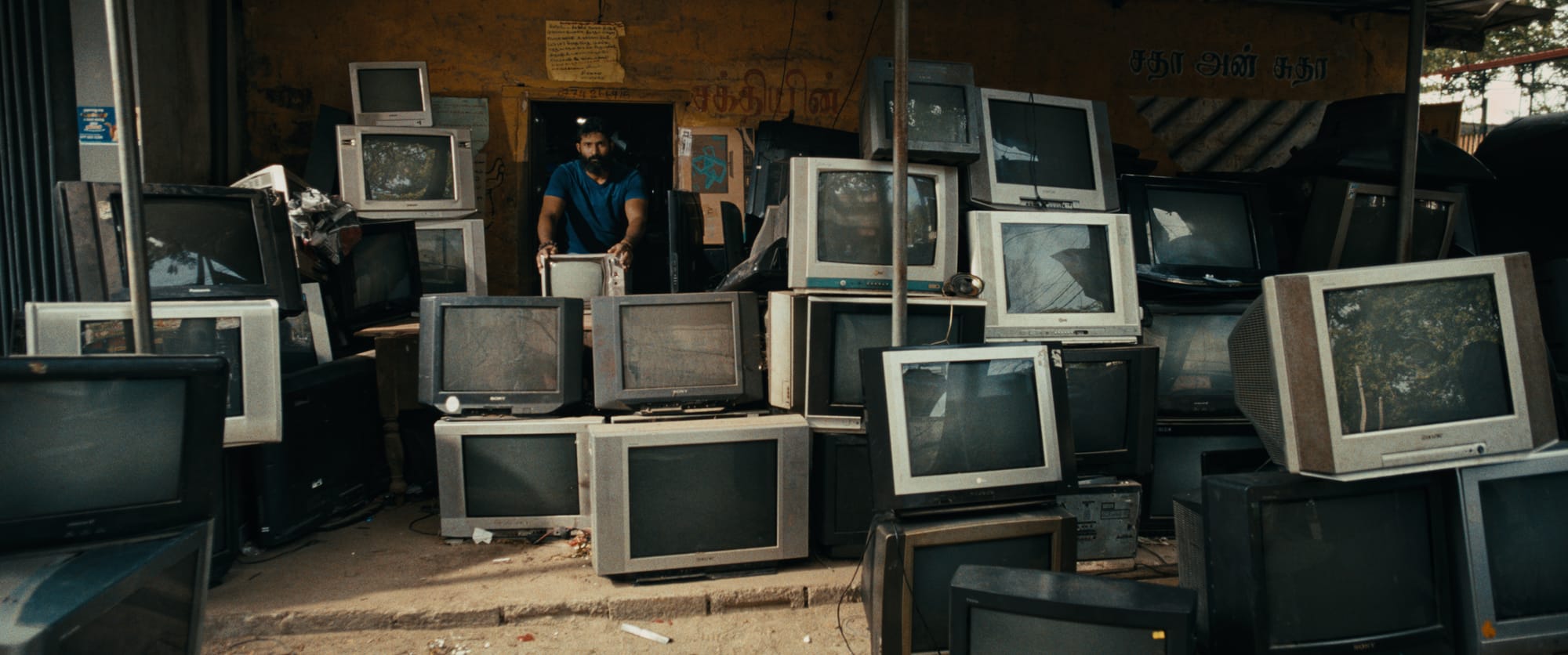
In the film, there is a recurring juxtaposition between lived, physical silence and heavily mediated narratives. We see this when the broadcast of Mahinda Rajapaksa’s denial plays on a single active monitor inside a graveyard of dead television sets, surrounded by a silent observer and signage in Tamil. We see it again when a mother's recorded testimony plays on a CRT screen next to a woman sitting in complete silence. In both instances, the physical presence of a silent living witness co-exists with an infrastructure of mediated speech (whether that speech is state propaganda or mediated trauma). Here, I see you working with two different orders of historical evidence: one that is heavily documented by the state, and one that exists only as memory and trace because the state has actively erased its material record. How did you approach staging these interactions between the quiet, physical body and the screen? When you were building the film, how did you handle the technical and ethical friction of placing this state-produced archive (one of the very few times we you give voice to the Sinhalese majority) next to a human testimony that the state insists doesn't exist?
I was interested in placing different forms of evidence beside each other. The body, the screen, state speech, testimony, silence. But there was also a practical origin to this. I had anticipated a constrained and difficult shoot, which it was, so I was looking for TVs that I could film in order to later insert or work with archival and testimonial material. So the TVs were partly an answer to the limitations of the production. Meaning we were being surveilled so there was only so much we could do. This was a way of creating a space where this material could enter the film. The mountain of televisions was something we were very fortunate to find. It almost reminded me of a Nam June Paik installation, except it was also literally a TV graveyard. That felt important. These dead or obsolete machines, these remnants of broadcast and mediation, sitting beside one active screen. It became a way of thinking about how history is transmitted, distorted, preserved, or discarded. With the Rajapaksa footage, I wanted the state’s denial to feel almost obscene in relation to the silence around it. The silent presence of a person became a kind of confrontation with what was being said on the screen and with media itself. With the mother’s recorded testimony on the TV, the mediation is different. It is not propaganda but it is still a mediated trace of pain. In both cases, the screen becomes a site where history is spoken or displaced, while the body beside it reminds us of what cannot be fully contained by the image or the recording.
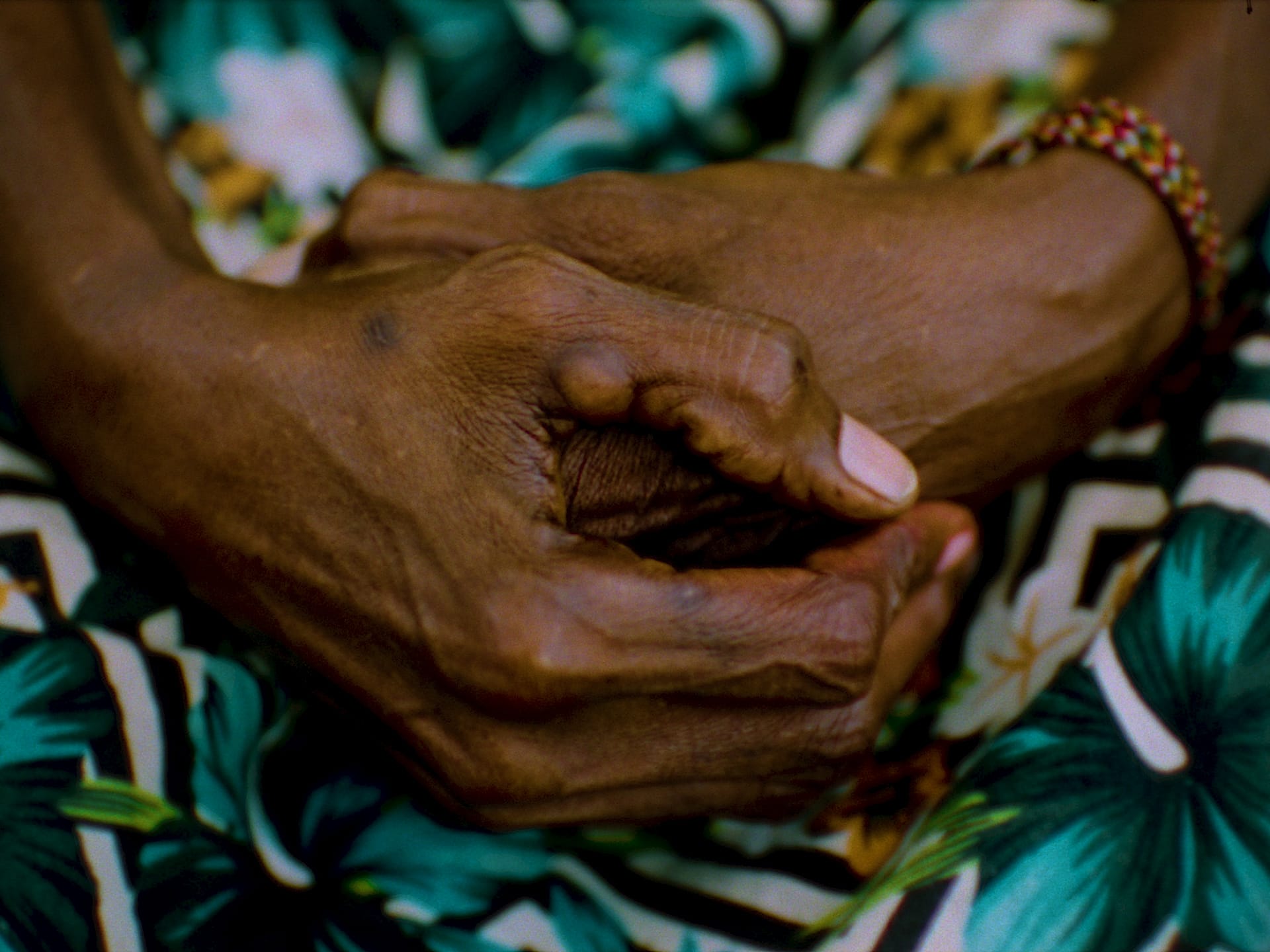
Throughout the film, the use of slow motion imposes a shared condition of suspension, an arrest of duration that affects the living and the missing alike, as if time itself has been systematically extracted from the community by the state. Yet, within this shared limbo, a critical rift emerges: the living speak in their own words while the disappeared are stood in for by the silent surrogacy of someone else's body. How did you conceive the dialectical relationship between the mothers' verbal testimonies and this physical surrogacy when both are trapped inside the same weaponized, stretched time?
I think the mothers’ testimonies and the surrogate bodies are meant to operate very differently. The mothers speak in their own words, and their testimony is specific, direct, and grounded in lived experience. The surrogates, by contrast, cannot speak for the disappeared or replace them. They point to the impossibility of representation. They mark an absence rather than fill it. At the same time, that absence has a presence of its own. The surrogate body creates a kind of doubling of absence. It makes the disappeared visually present but only as someone who cannot truly appear. So the image both conjures and fails to restore them. That contradiction was important to me. One form gives language to lived grief and the other shows the limit of what cinema can bring back.
In A Flower Falling Back Into the Earth, you return to a piece of testimony that never found its way into Your Touch Makes Others Invisible, an account that you've described as resisting and eluding the framework of the original feature. Even though this testimony is kept silent, the systemic predictability of state violence renders the structural reality of her loss instantly legible to the viewer. In this short, you also return to nature, but focus tightly on its minute details while explicitly foregrounding the work's identity as a constructed, staged film. How does this explicit exposure of the cinematic apparatus, combined with the focus on fragments of nature (as opposed to the totality of the landscape), alter the space required for this testimony? What was it about the feature's framework that ultimately failed to hold an account that carries such inescapable, systemic clarity?
It wasn’t because the account was unclear or secondary. It just operated differently from the other testimonies. The other women were, in a sense, giving versions of the same story, and that repetition mattered. It created a rhythm and a structure, showing that these were not isolated tragedies but part of a larger system. This particular testimony disrupted that rhythm. It was more fractured, and it spoke too directly to the limitations of testimony and of the form itself. I felt that if I kept it in, it would collapse the space the other women’s testimonies needed in order to exist on their own terms. I owed those testimonies that space. At the same time, this omitted testimony felt too important to abandon. It deserved its own structure, one that could stay with the failure around it rather than absorb it into the feature. A Flower Falling Back Into the Earth became a way of returning to that problem. The gap between experience and representation, between the person filming and the person being filmed, between what is given and what can never really be accessed. I was also troubled by the cinematic process surrounding it. The interview, the b-roll, the images gathered in an attempt to support or contain her pain. There is a violence in that gesture. To film someone’s grief and then search for images to make it cinematically available can become a violence. At least that’s the way I felt about it. So the fragments of nature in the short are not really illustrative or lyrical. They point to the insufficiency of that impulse, the failure of cinema to fully hold what it is trying to witness. The silence was important because including her words might have made the encounter too available in a way, too easily translated into information or evidence. I didn’t want the testimony to become something the viewer could simply receive, understand, and move on from. It was more than that. Her account was fractured and that fracture felt important. In a way, she was telling me that words were not enough and would never be enough. Removing the words allowed the film to stay with that limit. The silence was a refusal of easy access.