The Place That Shapes Us
Marlene Edoyan discusses A Fire There, hybrid filmmaking as a collaborative practice, and the young people of an Armenian village in Georgia whose visions of the future are shaped by the its history.
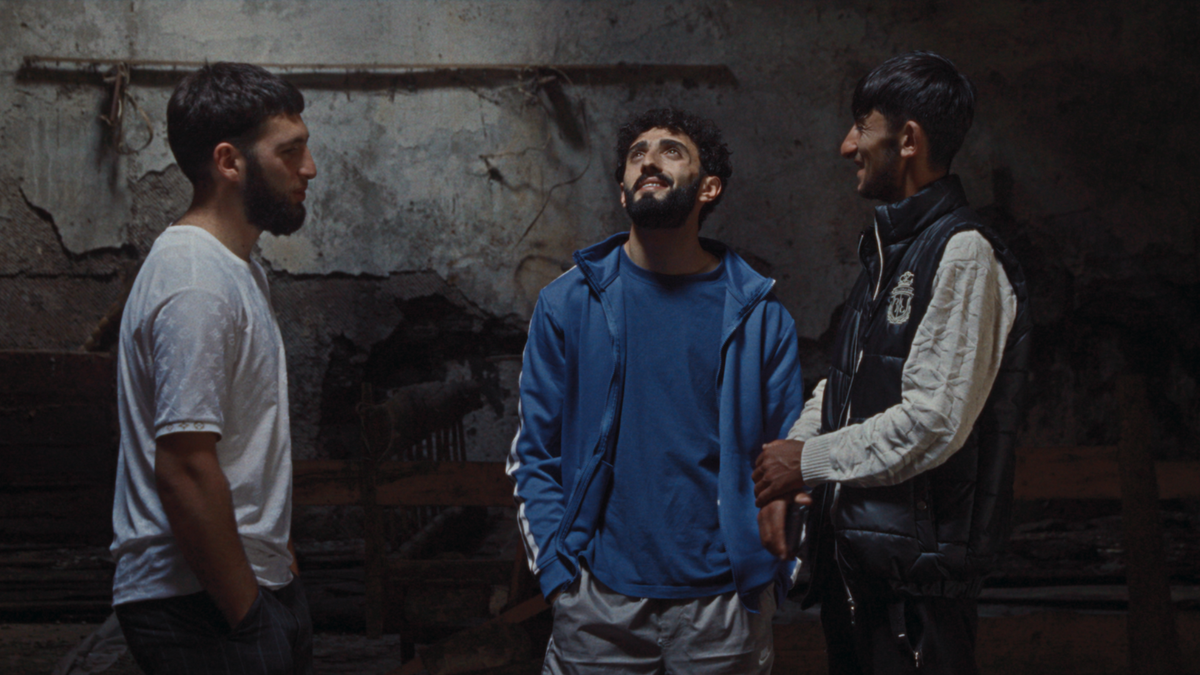
Marlene Edoyan first visited Gandza, an Armenian village in southern Georgia, while working on her debut documentary, Figure of Armen (2012). She has returned over the years, most recently to make A Fire There (2026), a hybrid film which follows three childhood friends as their lives begin to take different directions. Around them, a portrait of the village emerges through encounters with relatives, local rituals, and the buildings and landscapes that bear traces of its past.
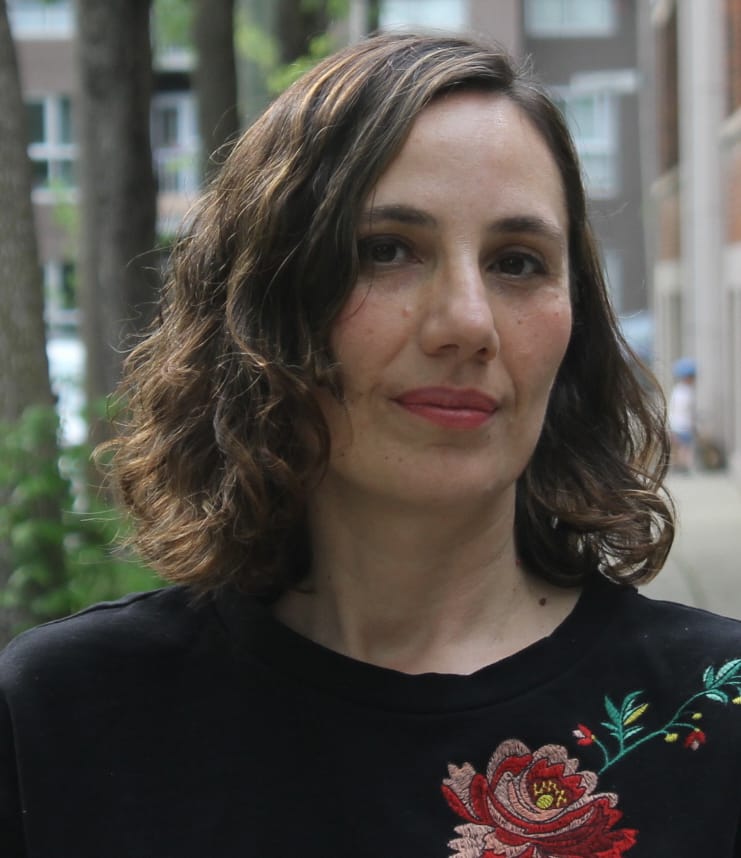
Born in Beirut to an Armenian family and now based in Montreal, Edoyan is a filmmaker, producer, and artistic co-director of the Montreal International Documentary Festival (RIDM). A Fire There received the Special Jury Award in the International Feature Film Competition at Visions du Réel in 2026. In the following conversation, we discuss her long relationship with Gandza, how the participants helped shape the film, and the choices and responsibilities that come with working so closely together.
You first encountered Gandza while shooting your first film, Figure of Armen, and you’re also credited as the main researcher on this film. What did your research involve, and how did you build relationships with the people there and make the project possible? You’ve known the place for many years now. How has your understanding of it changed over that time?
For me, research is the basis of everything. It’s the most important part: the time when you can sit down with that first inkling of an idea, that spark, and say, “Okay, what am I going to do? What am I thinking about?” It’s a beautiful time to explore your ideas, what you want to do. I’m interested in space, so first I choose the space I want to explore, and from there I think about the themes I want to talk about within it. The research period really allows you to think about how you feel about that space, understand the nuances of what you’re working on, and hopefully eventually translate at least some of that into the film. I think it’s also when you’re clarifying your vision, polishing it.
I’ve also realized that the more research you do and the more you intrinsically understand the region, the people, or the ideas you’re exploring, the smoother the production and filming process becomes. Production is such a complicated thing. You’re on set with a team; there are production realities, such as a budget, and so everything needs to be tight.
Filming style is also a factor. For some filmmakers, it’s a solo project: they take their camera and recorder, and they film, record and research all at the same time. But for the kind of projects that I am interested in - where I’m all the way in Canada and thinking about ideas far away from me, and eventually taking a group of people with me - I need to spend enough time on research and development on my own so I’m not wasting anyone’s time afterwards. For me, it’s also a personal period when I allow myself the grace, the time, and the reflective space, creatively, mentally, and emotionally, to really connect with the people and the place that interest me.
Another thing, I think, is that allowing yourself this period lets you see whether you’re obsessed enough with your subject or the idea of the film, whatever the format is, whether you love it enough to live with it for four to five years. It’s like being in a love affair. In the beginning, you’re trying, and the spark is there, but if it’s not a real connection, it fades and you lose interest. I think we’ve all had projects like that. But I think this film and The Sea Between Us were sustained because the fire was being nourished all the time. Research really allows that: the ideas you’re finding, what you come across, the new ideas that excite you.
I’m fascinated by the Soviet regime and what happened to those nations afterwards. When I started thinking about young people in this region, I was asking myself, “How do I not pit Western ideology against Eastern ideology?” I’m a product of the two myself. I was born and raised in Lebanon, in a family of conservative Armenians where Armenian is the basis of everything. It is my first language, but because of the war, I also grew up in California. So, I’m a dichotomy of East and West.
I’m also a woman who grew up in a Middle Eastern country. I rebelled: I came to Canada and settled here. The research and development period is where you face all your demons. It’s the time when you can really face certain challenges. For this film it was the patriarchal values I was confronted with in the village. Patriarchy exists everywhere, although it may be more deeply embedded in certain parts of the world due to local realities and social contexts. This is why feminist consciousness is essential everywhere, in both the West and the East. I had to try to understand the issues of gender inequality but within the local context. So research is essential – it is the time to make peace with certain things and say, “Okay, now I can look at this in a more objective way.”
Finally, this early period is also when you’re testing the aesthetics of the film. What films are nourishing you? What are you watching? What films are inspiring you? I think it’s really good to test that on the terrain. I went with a friend in 2018, and we started filming. I was getting interested in certain films and thinking, “Would this kind of film really fit this environment?” Again, this early period is so essential, and I think it lasted quite a long time for this film.
You mentioned watching films and testing aesthetic ideas during research. What were your influences? And did your work as a programmer at RIDM affect the way you approached A Fire There?
It did. In the beginning, it overwhelmed me, because I’m someone who watches a lot of films to start with. I started programming in 2021, and in 2022 I was really searching for the film’s visual language. I got overwhelmed. I was like, “Where do I start? How do I do this?” I didn’t have my cameraman yet.
I was watching a lot. Anna Eborn’s film Transnistra, shot in Transnistria, really fascinated me. Her style, the fact that it was shot on 16mm. Showing the story of one girl in a group of boys, filmed over one summer and one winter. There was all that Russian influence and the stories of migrant work, but through the perspective of a strong female character. That inspired me aesthetically and narratively.
Another filmmaker I really enjoyed is Pierre-Yves Vandeweerd. He’s Belgian, and he made Inner Lines. That was his last film. Again, he shoots on film. I think it was the aesthetics of that free-flowing imagery of the region mixed with poetry. There’s a lot of voiceover in his films. Because I was really playing with the idea of poetry, the poetry of Vahan Teryan, I was also thinking that maybe all the poetry could be a voiceover, a narration that would guide the film. There were so many different variations in my head, and it was really overwhelming because there was so much potential.
I started researching, but COVID-19 happened. Then the Russia-Ukraine war happened. There were so many obstacles, and as I started filming, I realized I didn’t have the access to the young women I thought I would have. That was a challenge: trying to understand how to go about it. Because of the pandemic, I had to be very practical. Some of the families I’d met in 2010 helped me, and I had to stay in touch with them virtually. I also did a lot of film labs for this film, such as EURODOC, CinéDoc Tbilisi and others.
My first encounter with the community was when I was filming Figure of Armen. I arrived in this village and truly fell in love. I thought I had no past, no future. It allowed me to feel that I’d connected somehow unconsciously with a deeper side of myself, maybe with a history I didn’t know. It was the first time I really felt connected. I’ve never been to Turkey, but I wonder if it’ll be a similar experience for me, since my grandparents on both sides come from that region. The closest I’ve had to that kind of intrinsic experience is when I go to Greece. There’s this old-worldly connection that you feel you’ve inherited somehow, but you don’t know how to put words to it.
I had a very strong connection to the people of this village particularly. They’re very educated; that’s the Soviet heritage. There’s a lot of literature and music. It’s also in Armenian culture, but the fact that people were allowed to get educated and move around the region allowed poetry, literature, the arts, and music to survive on these lands. The people I’d met in 2010, the friendships I’d continued to have, allowed me to go back in 2018 with a filmmaker friend who had his camera.
But after eight years, a lot had changed. The people had changed. The young people, I think, were more connected to the outside world. It’s a very closed-off and isolated region. Geographically, the mountains kind of protect them. And it’s a region where they need to protect themselves. We can’t forget its history.
During the mid-19th century, the Russo-Ottoman Wars contributed to significant population movements across the South Caucasus. Armenians from Ottoman territories were forcibly moved to areas under Russian control, including parts of present-day Georgia and Armenia. At the same time, many Muslim populations, including Turkic-speaking communities, left territories that came under Russian rule and moved to the Ottoman Empire. These movements reshaped the region’s demographic composition.
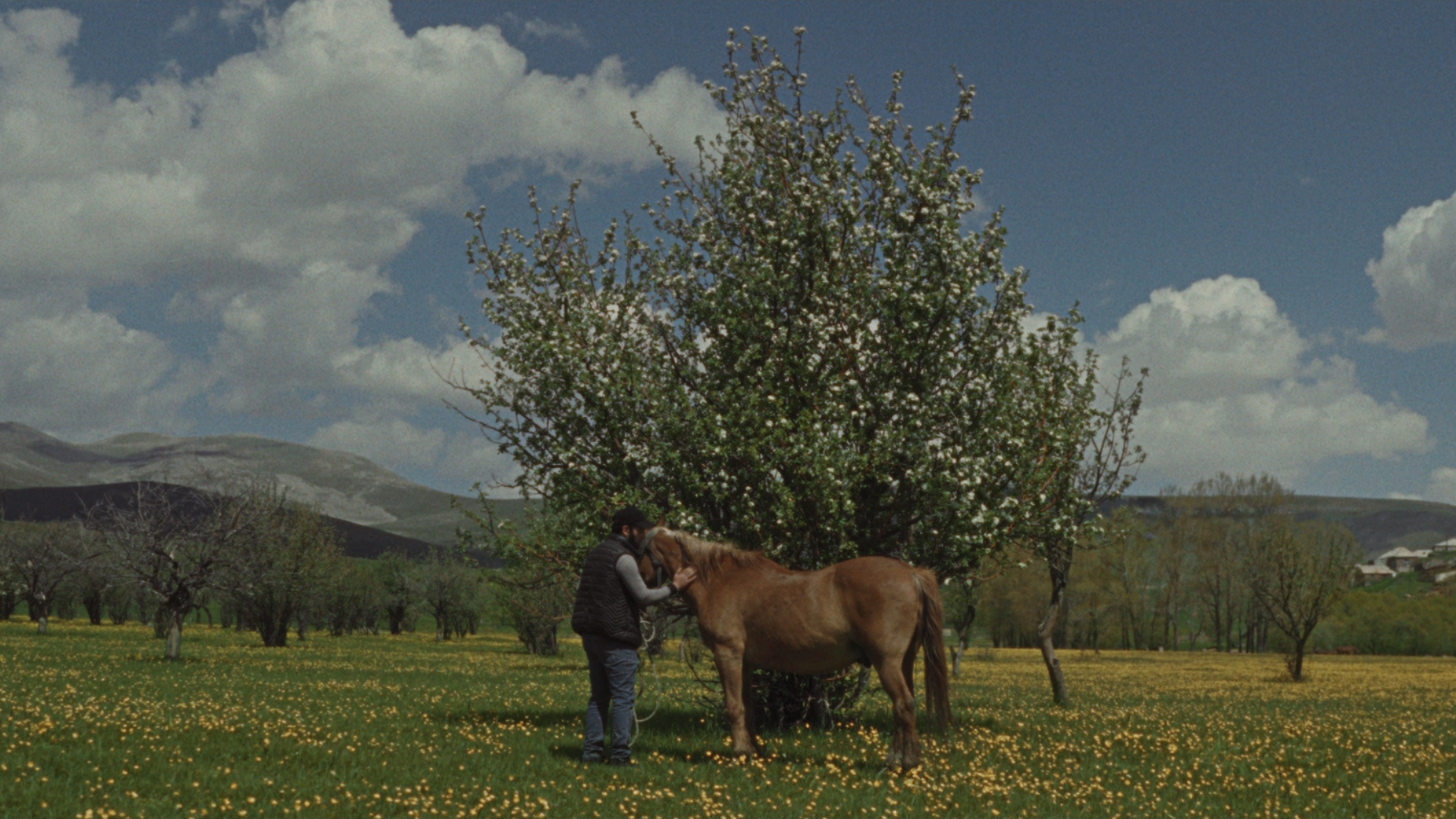
The villagers told me stories of the hardship when they came from Erzurum (Turkey) to Javakheti (Georgia), which is such a cold plateau. Even in July, I was there with my Canadian winter coat. It’s so cold, and nothing grows. They left the Mediterranean landscape and its fertile land for this very infertile territory. It kind of made them into these rigid people who were constantly surviving the cold, the snow, nothing growing. They faced repeated attacks from different adversaries throughout their history. They became enclosed on themselves, constantly learning how to survive on these lands.
So, in trying to understand the people, their mentality, conventions, and traditions, I finally understood how human geography is a real thing. The geography you live in and the history make you into the person you are. I find it fascinating, but of course I’m going there with all my baggage. I’m going there as a woman educated in the West, who rebelled against patriarchal values. I had to learn to understand the codes of the culture, why they were acting in certain ways. I think they are a product of whatever was given to them.
What you’re describing sounds close to an anthropological approach: trying to understand people and the conditions they live in without imposing your own ideas on them. That’s something I appreciated in the film. It doesn’t impose a Westernized view, nor does it criticize what the people say or do. Was it around 2018 that you decided to make a hybrid film, rather than an observational documentary like The Sea Between Us, or did that happen more gradually?
No, actually. When I was filming The Sea Between Us, my second feature, I was so enamored by cinéma vérité and observational cinema. It really fascinated me. I spent a year and a half with the two female protagonists, and eventually we became good friends. In the neighborhoods where I filmed, we were saying hello to everybody behind the camera. I became friends not only with the women, but with their families, children, husbands, neighbors, cousins. In the Hezbollah neighborhood, I became friends with the Hezbollah fighters. I was going to their funerals. I was getting to know them. And doing the same in the Christian, right-wing neighborhoods.
Again, it’s very anthropological, in a sense. It can’t be an artificial love you have for people. You need to genuinely understand them, without being judgmental. Even if they’re telling you things you don’t agree with, you can’t judge them. They are a product of the past, here, of the Civil War in Lebanon. If you take Lebanon’s Shiite community, they experienced significant social and political marginalization, particularly during the French Mandate and the early years of independence, and the “oral Lebanese constitution” reserves the presidency for a Maronite Christian. To understand a group of people, you need to understand the whole history and geography. It was such a learning process for me. Even though I was born and raised in Lebanon, I was so oblivious to all these tensions.
To answer your question, because I got to know these people, the women and their families, so well, I started directing them. It does come across as cinéma vérité, but I was directing what they were saying. I was saying, “No, Wafaa, tell me that story you told me when we were on that mountaintop.” I realized how much I was enjoying this collaborative kind of direction. My cameraman at the time said, “You should be directing fiction films. You have a knack for this.” And I thought, “You know what? In his first films, John Cassavetes was shooting with real characters.” I was really in love with that kind of cinema.
I thought, “Okay, for this third film, maybe I can make a hybrid fictionalized film where I meet the characters ahead of time, spend a lot of time with them, and then write a script.” The idea was to be more economical with my time there. I’d get there, film it as a script, and leave. But of course, real life doesn’t work like that. When I went in 2018, I met a group of young girls. They were fascinating. I was friends with their moms, so their mothers gave me access. They allowed me to intervene and created safe spaces for us to film.
But the COVID-19 pandemic happened, the war happened, and things took longer. Even though I had a bit of funding and could have filmed with these women, who knows? Maybe if I’d gone over and over again, their brothers, sisters, or fathers might have said, “Enough filming. You’re abusing your welcome with the families.” I went in 2022 to cast new characters. I found Henrikh and the other boys at that time. The women who’d helped me initially in 2018 found new characters for me. One of their daughters, whom I was supposed to film and who’d been eighteen at the time, had gotten married. Her mother allowed me to go into the in-laws’ family to film with her daughter and the sisters-in-law, two young women, together with their mother.
Afterwards, when everything came to a halt with them, the mother told me her dream had been to become an actress. Imagine, in that village! And she’d said yes to participating without her husband’s permission. But she also hadn’t realized how demanding it would be for her, her daughters, and the neighbors’ daughters, who were all secretly engaged and in love with village boys. So, it became impossible once their fiancés found out, once the fathers in Russia found out. The neighbors were secretly filming them and sending the images to Moscow. This incident stopped everything for the winter block. To my chagrin, I was really sad. But then I thought, “No, this is a learning moment.” That’s when documentary comes in. This whole script I’d built around the lives of the female characters came to a standstill.
But luckily nothing changed with the boys, because Henrikh, being this incredible, luminous person that he is, understood exactly what I wanted. He’s very open, and this is a quality a person is born with. Apparently during their childhood, while the boys were playing football outside, he was inside reading books. He knows history very well, geography too. He’s won several competitions. I think he won the main Georgian competition for history and geography in the region. He’s really knowledgeable. When you know history, it just opens your mind.
He understood what I wanted and orchestrated things with his friends. There was a whole bunch of young boys around him, and he brought them all into the process. We were out in the landscape, in the areas where they hung out. They have the freedom to hang out in nature, so it all happened naturally. While the girls had to be filmed indoors, out of the villagers’ view. The few times I took them out in nature, there were boys in cars constantly coming and going, annoying them. They would stop, park their cars, and look at what we were doing. There was a lot of gossip, a lot of looking under a microscope. There was just no freedom for the girls. And it’s understandable considering the local social conventions and traditions.
So, I had to adapt my film, my script, and my ideas. I got really lucky with my editor and my camera person. I had an incredible director of photography, Étienne Roussy, who is a master at what he does. Étienne films fiction films but also takes on a lot of creative documentary projects. From the beginning, we decided there would be no rushing. We’d film and set up the scenes as you would for a fiction film. He took a lot of equipment with him, lighting equipment. Everything was filmed either in natural light or with controlled lighting.
That’s why we have all those atmospheric spaces in the scenes, like the one with Karlen and his family around the kitchen table. There’s one light from above illuminating their faces, and everything is so dramatic under that light. That day, Karlen was so angry with his family. All that angst, that annoyance brimming out of his face, is real. Magic happens too. During that scene, there was lightning. They’re talking about the weather, and the real lightning hit. They’re like, “Oh, it’s raining,” and the camera captured that. That’s movie magic. There were so many beautiful things shot for this film. Of course, you can’t keep a hundred hours. The film is an hour and a half.
So Henrikh was key to this. He grouped them and, in a sense, “compelled” them. And then he gave the key: these boys were the key to their mothers, their friends, their families.
What I found interesting about the fortune teller, and this happens in many cultures, I think, is that she has a kind of actual power over the men, telling their futures, whereas the priest has ritual, symbolic power. Within the film, he doesn’t really do much. The men in the church seem to follow the ritual because it’s what they have to do, but when they want to know about their lives or seek advice, they go to a woman. Is that how you see the relationship between them?
Another gift this film brought me was my editor, Omar. With Omar, we said: “How do we show these things through symbolism?” In real life, the priest became a friend, and allowing me to film him in front of everybody helped the community trust me. In real life, he really helped me. But in the film, we show him as a symbol of patriarchal values, while the real motors of life are the women. They give you life. They read your fortune.
We also realized that social allegory was happening, poetic allegory was happening. Henrikh’s mom is really important. His aunt is really important, too. The aunt is the matriarch in that final scene, around the dinner table. She freely speaks up and guides the final “sacrifice” scene.
We realized that young men are so wonderful when they’re young, before life really gets to them. They’re these beautiful souls. Then they become migrant workers, and somehow a bit corrupted. Meanwhile, the young girls are seen as symbols of virginity and purity. Some of the elders and community leaders told me that they need to uphold this image so that they can marry and become wonderful mothers, even though the majority of these young girls have university degrees—more than the boys do. There was a kind of “biblical” allegory at play, with the young women almost portrayed as saintly figures. However, something shifts once they get married: they seem to be less revered. Yet as they grow older, their voices become stronger within their families.
In the film, you have these young boys, not the young girls, talking, and then the older women talking. It’s like they reflect each other. The female characters are there, but through poetry, through culture, as readers of these men’s futures through their coffee-cup reading. We start the film with these strong, back-boned women dancing. They’re there dancing three times: at the beginning, to say the film is on the back of strong young women; in the middle, dancing with so much pride; and at the end, with this very young girl and the grandfather saying, “Yes, Mane, prove yourself.”
They’re saying, “Look how strongly she’s stamping her feet on the floor.” For me, this is so important. Finally, this male figure kind of gives the torch to this younger girl, saying, “Now it’s yours. The future is yours.” We finish the film with beautiful poetry read about the struggle of the people by an erudite-looking woman. There’s also the grandmother singing about longing and the aunties doing these cheers. The women are there, but within the boundaries of the local social conventions.
What was Henrikh’s contribution to the film? In another interview, I think you mentioned that the final banquet, with the dancing and speeches, was his idea. Did he help with finding locations and with ideas about the landscape and how the young men perceive their village? There’s a lovely scene in which he takes a photo of his friends and says, “Our village is so beautiful.” At the same time, he wants to leave so that he can hopefully return and help it in the future.
They all love their village. There are so many songs, so much literature and poetry about it. As harsh as it is, they love it very much, and they’re very, very proud of it. I think making this film, showing what the space could mean to other people’s lives, seeing it valued through the eyes of an outsider, I saw a change in how they were posting and reacting to it. Sometimes, when you live in a space, you don’t realize what you have or how beautiful it is until somebody points it out to you. I think there was a bit of that in the beginning, although they love their culture.
It wasn’t only Henrikh who helped us. Hakob was extremely helpful too. He became a production assistant in the end. He had a car, so he was taking us places. He was always present. He is an incredible human being. Such a lovely soul, a kind soul. Karlen was a little trickier. He’s a little more slippery. He has more wit. But eventually he trusted us. He was the least open, I think, of the group, and only allowed us into his family life at the end.
The other boys were very open from the beginning. Henrikh’s home was a meeting point. His grandfather, whom I adore, is in the film. He’s such a bright character, and you see how much Henrikh has taken from him. He was the only senior man I could joke with, and he would joke with me. The first time he saw me, he gave me a bouquet of flowers he’d collected from nature. He was the only man who would openly ask me, “Hey, daughter, are you paying the fees of all these men? They’re working for you?” I’d be like, “Yeah, grandfather, I’m doing that.” He was so proud that, as a woman, I’d brought the team. I was in charge. He took so much pleasure in knowing that. And you see Henrikh gets that from him.
With Henrikh, I could talk on a deeper level, and we would talk all the time. He helped me even once the film was over, with the subtitles, with everything. Even with the festivals, I consult with him. He’s my confidant for the film, my go-to person. And he says to me, “I’m learning so much from you.” He wants to do cinema. It’s reciprocal - he helps me, I help him.
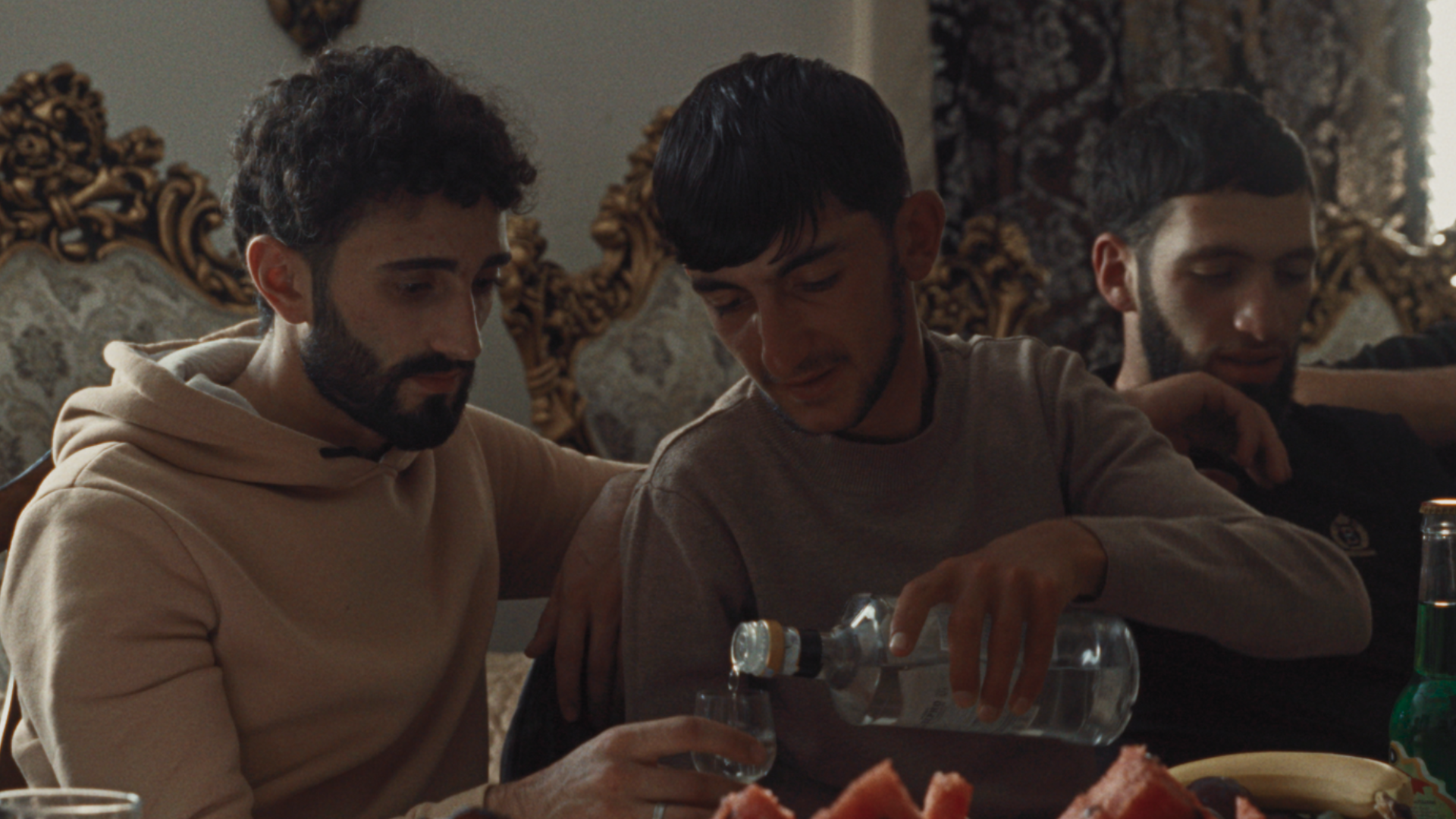
Yes, it was so interesting that he suggested the banquet at the end. He said, “Let’s do a sacrifice scene,” where you sacrifice the animal, and it really brought everything together. All of a sudden, it became like a biblical film. Henrikh is this “Jesus” character, almost. He’s searching for wisdom and the light. He’s like the illuminator. He goes outside, comes like a prophet, illuminating the people around him. Then things started falling into place. The sacrifice scene is the last scene, with the feast, and it just became very biblical. The church scenes made more sense. Symbolism made more sense because of that scene of sacrifice. It is a long sequence. I think it really works because of that. You finally see all the different villagers coming together, and it’s a beautiful moment.
You also see the different practices of the generations. Each older person has to give a toast to drink, while the young people seem less interested in that. The women have a lot of say too; their toasts are much more boisterous.
Exactly, exactly.
Both films of yours that I’ve seen focus on people while contextualizing them within much larger geopolitical situations and geographical movements. In The Sea Between Us, we immediately know we’re in Beirut, in Lebanon. Here, we don’t initially know where, or even when, we are. The time becomes apparent through Henrikh’s television, when he watches reports about the invasion of Ukraine, which has consequences for all their lives. Why did you choose to introduce the historical context that way?
There are a few reasons. One is just because of aesthetic choices. When we were filming, Étienne and I said, “Okay, let’s try to film this as a fiction film.” We shot a lot of scenes that went into politics and history. I made sure I had everything. I covered my back. I made sure I had the fictionalized elements that would work as a fiction film, and a lot of footage of them talking about politics and history. But when it came time to edit with Omar, we had a lot of discussions about how to cut it, and we decided to do it as a fiction film.
I think the difference with The Sea Between Us, again, is experience. I think I had less experience then. I was trying new things to the best of my abilities. That’s the only way I knew how to direct. I didn’t know how to direct differently, so it came out more as cinéma vérité. My editor, I think, had done more documentaries, so she cut it as a documentary too. Whereas Omar had also edited a lot of fiction films. He asked me, “How do you want me to cut this? Is it fiction or documentary?” I said, “Cut it as fiction, but we’ll make sure there’s enough context to indirectly talk about these issues.”
The Sea Between Us is kind of dialogue-heavy. There’s so much dialogue, and you need to follow what they’re saying. With this film, we wanted the space, the boys’ reactions, and the decisions they’re taking to be intrinsically fed by the history and geography, but indirectly. We made sure there was just enough information. I didn’t want explanatory text or anything. I really wanted this to be a hybrid fiction film. It was my aesthetic trip. Stylistic ambitions, I guess.
Omar is such an incredible editor. There were so many things he had to think about: how do you talk about patriarchy, the space, politics, the future of these boys? How do you show the women? The first scene is so important. It says just enough for us to understand they’re in a border region, that they’re young boys affected by the war in Ukraine. There was also a line about the Azerbaijan-Armenia war in 2022 that he took out. Omar said, “Let’s take this out. Let’s not follow the stereotypical clichés.” And I think that was the right decision. The more political side of me, which had done The Sea Between Us, was like, “No, let’s bring it back, let’s bring it back.” He had to gently counter-argue. I would have left out the part about playing soccer and loving Spain and put some more politics in there. But he knew how to balance these two aspects really well. And I am grateful I took his advice.
For me, this is what makes creative documentaries and hybrid films so complex and interesting. There’s the beauty of the images and the way the film presents experiences that can feel universal, while the documentary material situates them within a particular history and time. It keeps the story from becoming generic.
Right, right. Exactly. I think that’s why, when you do the research and place people in a certain situation, in a place, your brain kind of computes: why are you filming this scene this way? Why are you showing these guys around the fire? I think these are all effective ways of using space, history, and geography to talk about issues and themes. Then it becomes a matter of how you edit and construct the narrative structure together.
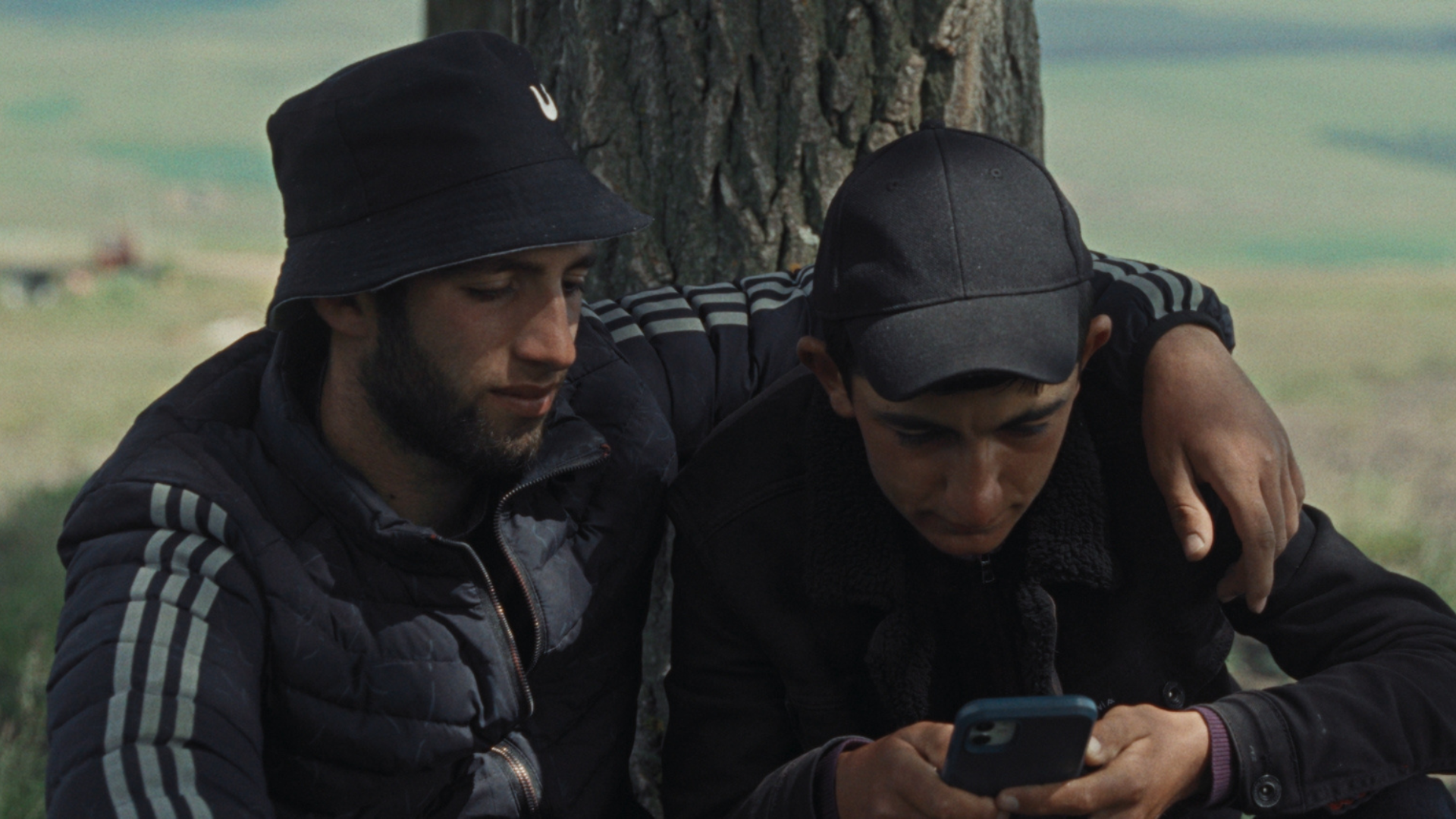
The abandoned factory is another example: the space carries the history of what happened to the community. I found it interesting that Karlen’s support for Russia and fascination with the Soviet Union are placed within that crumbling infrastructure, especially in his confrontation with Henrikh, who seems more oriented towards the West. There are parallels in Bulgaria, where a fascination with Russia and Soviet nostalgia also appear among young people, partly through TikTokers and AI propaganda. I don’t know how widespread it is in Georgia, but is it common in this community or region? What do you think sustains it, particularly given the community’s history of being forcibly moved from Turkey to such a difficult place to inhabit?
This is something I came across from the beginning. I knew it was going to happen, so I really prepared myself for this aspect. My first trip to Armenia was in 2000. I stayed for three months and got a real education. It was an interesting time to be there because they hadn’t been out of communism very long, almost ten years. It was still very Soviet. I was so young and naive. I was like, “Everything is in Russian, why not in Armenian?” Then people educated me, and I understood. This nostalgia was still very alive. Afterwards I went to Armenia many, many times. I made my film in 2010 and went to all these rural regions. Even the capitals still had this nostalgia back then.
But there was a big shift over those twenty years. The main shift was in the capitals: among the educated people and the new generation in Yerevan who had not lived under this regime. Tbilisi, which turned towards the West much earlier than Armenia. Ironically, they’ve shifted places. Armenia was previously very Russia-leaning but these days Armenia is parting ways for a new kind of revival, allowing more Western-leaning ideals to come in.
For the last twenty years, Tbilisi was filled with NGOs, to somehow implement Western ideals. There’s a bust of George W. Bush, the father, in the city. It is all politics, right? It’s not because they love Georgia; it’s geopolitics. It’s to get oil from Azerbaijan to Georgia and Europe. It’s all about oil and gas. Georgia has a history with Russia because of their 2008 war and they lost two regions. And the Ukraine war forced the government to do a 180-degree turn; Russia threatened them, saying that otherwise they were next in line.
However, the part that fascinates me is the concept of an “age of imitation”. I was doing a lot of research about this idea. After the breakup of the USSR, there was this idea to Westernize the Eastern European nations rapidly. It was a very artificial effort to Westernize a lot of these South Caucasus countries too.
During my research, I was following my young characters on Instagram. Social media was an efficient way to access their psyche, to see what things make them tick. I was watching what Henrikh and Karlen were posting. Karlen was posting Scarface, Al Pacino, Western stuff dubbed into Russian, and certain types of images mixed with Russian rap. Henrikh was posting images of his daily life in the capital with Lana Del Rey music. They were both searching for modernization through different channels. Henrikh was looking more towards the West, dreaming of Europe. They were having arguments about meritocracy. Henrikh was expressing very capitalist and liberal thinking: if you make money and get an education, it’s because you’re putting effort into it. Karlen was saying, “Well, no, I love the Soviet period because there was equality for everybody.” He was relying on different kinds of values. For me, this was very interesting.
I shot a lot about these values and ideals, but we decided to stay with just a little at the beginning, in the first factory scene, and show how they were changing bit by bit by the end of the film because of Henrikh.
Honestly, it didn’t really stick. Hakob is still in the village, working at the cheese factory. Karlen moved to Moscow and became a migrant worker. And he seems happy with his choice. He’s financially independent.
The last thing I wanted to say about nostalgia in the region is that you can’t forget language. Russian unites all these nations. The older generation of Armenians don’t even speak Georgian. When they go to Tbilisi, they speak Russian, and the Georgians are really fed up. I understand why. Javakheti feels quite isolated, and they refuse to learn Georgian because they speak Russian. There is tension and conflict between all the South Caucasus countries, Georgia, Azerbaijan, Armenia. But here’s this one language and an old culture uniting them: Russian and the Soviet period. It’s so much a part of their history and culture now. It’s hard to separate that. And Russia does a really good job of keeping it there.
Something similar is happening in Bulgaria as well.
People in Bulgaria are using Russian?
No, but Bulgaria remains under strong Russian influence, and older people know Russian because it was compulsory. For them, it’s easier to speak with Russians or Ukrainians in Russian than in English. The contrasting orientations of Henrikh and Karlen also make the film feel universal to me, particularly from a Bulgarian perspective. They can be seen as archetypes of two ways young men in Bulgaria, and perhaps elsewhere in Eastern Europe, try to construct their identities: a pro-Western orientation, which seems to be diminishing here, and a pro-Russian one, with nostalgia for a period they never lived through and which most probably wasn’t as they imagine it.
But something I particularly value is that the film doesn’t pathologize these young men, as many recent films tend to do with men of this age, especially those living in patriarchal societies. Your characters exist within that hierarchy and sometimes reproduce it, for instance, when their mothers serve them and they don’t help. How did you approach portraying them without reducing them to men who perpetuate control over women?
I think I caught them right at the age when they hadn’t really formed as adult men. They were still quite young, still under their families’ influence. Hakob is a gentle soul, so it was easy not to show him as a very dominant, alpha figure. I think his story is interesting. Monika is not a fictional character. She is a very modern girl he met, ‘modern,’ again, depending on what you call modern. But from what I saw on her Instagram feed, she dances, travels and goes out. She lives in Yerevan.
He’s living in this village, completely head over heels, and the families were already thinking about the wedding and how to bring her over. That scene about kidnapping was completely unstaged. It was information they willingly gave, and I think it’s because they somehow believe in it. Hakob’s mom was kidnapped. Having that material and not putting it in the film would have been wrong for me. We really thought about it before we committed to the sequence. It’s also interesting to see how patriarchy is being carried out through the hands of the grandmother and the aunt. They become the enablers of this patriarchal mentality. There’s this very enclosed region where geography and history, your history, impose a certain reality. So there’s convention and religion, and then there are the men who are the mechanism behind that, and the women are somehow the enablers. And in the film, you see this young man trying to think about having his own family, but at what cost? It was important to show this scene as a way for young Hakob to reflect on what it means to bring a bride into the village.
And about Monika, she’s the only young woman we don’t see, but she’s actually rebelling against this young man, saying, “Why are you reading my DMs? Leave me alone. You keep calling me. What is wrong with you?” And she says, “I’m breaking up with you. This is not working.” You see all the life leave Hakob’s face. Again, it’s about symbolism and how to use the female voice to comment on patriarchy.
I think Karlen has probably changed now with his move to Moscow. I see a shift in him because of this. Hakob and Henrikh came to Switzerland with us. It was their first time outside the country, a big eye-opening experience. They said the trip really helped them with getting exposure to different ideas.
I think it’s a very complex portrayal of young men, which many recent films don’t offer.
I’m their mothers’ age. They’re my daughter’s age. In a sense, I had this maternal thing around them too. I saw the patriarchal mannerisms and how they were acting, but I also wanted to protect them. It’s this love you have for your characters, like your children. I didn’t want them to come across as insensitive. It was also about finding a nuanced way to show them.
Especially in the scene with the DMs, he could easily have come across as a patriarchal man continuing that system. Although I completely disagree with what he does, we also see something very pure in his love, a first love, with the intensity it can have for a young man. Not quite obsession, but something very intense.
Exactly, exactly.
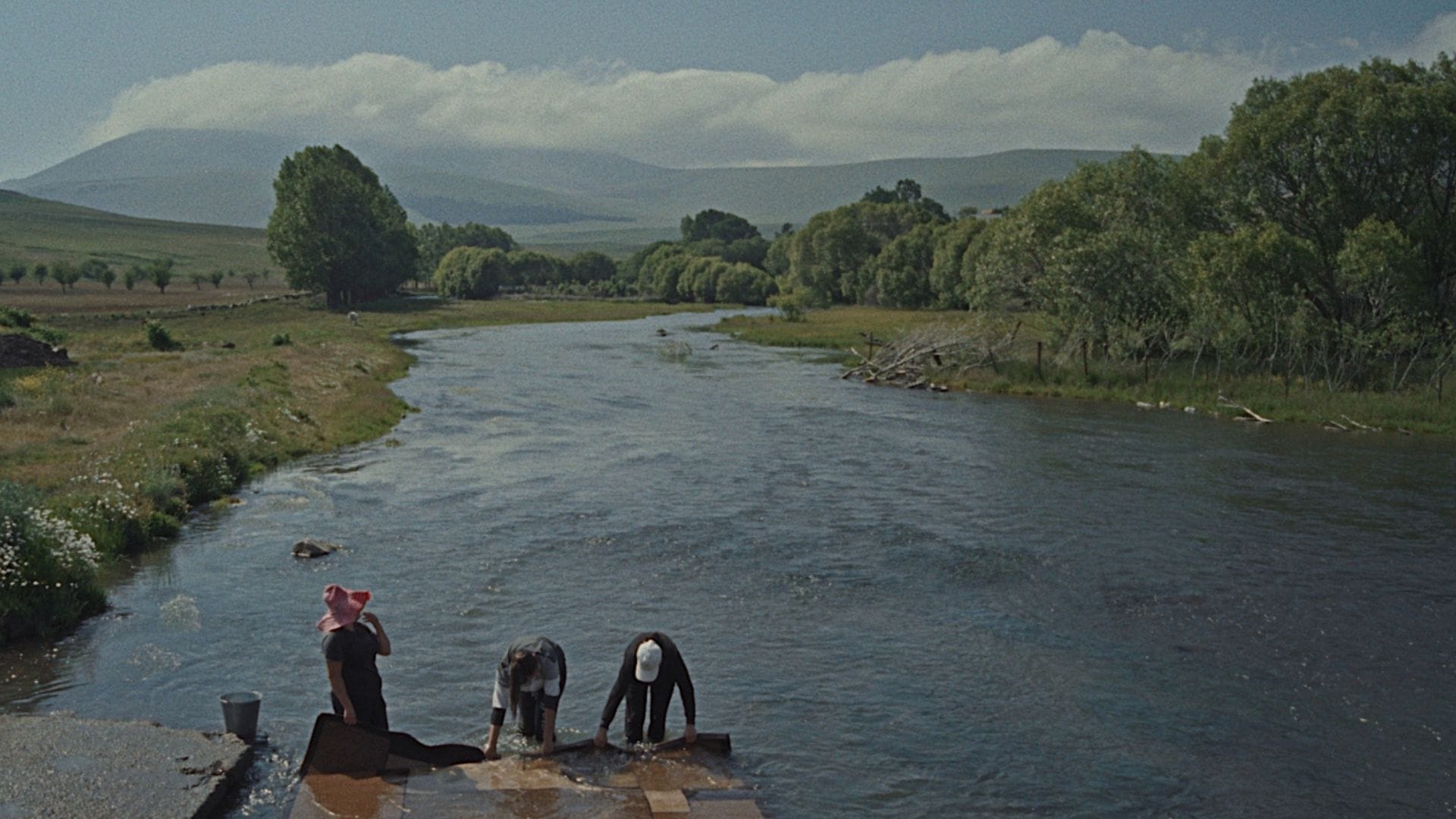
You mentioned how Henrikh’s grandfather responded to you as a woman directing a film and leading a team, with considerably more power over men than women in the village are usually allowed. How did other people respond, particularly the young men? Did working with you change how they perceived the way their village operates, or lead them to question it?
Yes, they did question it. There was a really beautiful scene we shot in winter with all the boys together, talking about these issues. We didn’t put any of it in the film, but I think it helped them understand what I was doing, why it was me, what I was trying to do. I was very honest with them. I would question them, and off camera we had so many talks together.
I had some hard times. I can’t say it was easy all the time. I think what really helped was the village leader and his family. He’s the person who made the paintings. He’s a historian. He’s not religious, but he’s very traditional. But he’s an artist at heart. The woman reading the poetry is his daughter-in-law. They’re a very open family and always took me into their home. Whenever I had a hard time with the villagers, I would say I’m his guest and they would let me be. That gave me legitimacy.
The priest also had full trust in me. He’s not from the village; he’s from Armenia. He was like a priest out of an Italian black-and-white neorealist film. All the clichés. The priest who disliked his parishioners, disliked village life. He would talk sternly with the villagers. I would tell him, “But priest, what do you want them to do?” He would say, “They prefer the animals to Christ.” I would reply, “They have to wake up early, milk the cows, take the animals to the pasture. They’re farmers. They can’t choose Christ over their animals unless you help them financially.”
I think it was a unique experience for the villagers too. I also became friends with the mothers. We talk and send messages to one another. Don’t forget, I shot this over three years, four seasons, with five years of research. Henrikh says it all the time: we became a family at the end, all of us. Not with all the villagers, but with at least five or six families. We became close, close family, friends.
You can feel that in the film, in the way people behave. We see people of different ages too. I remember a scene, perhaps the only one, in which boys and girls play together and one boy throws water at a girl. It’s one of the few times we see people from the two genders really interacting.
Exactly. When they’re young, they can play together. But as soon as they get older, they divide. I think, honestly, with these patriarchal things, it came down to honesty: the fact that I’m super honest, super transparent, and have no filters. Sometimes I had to really watch that what I was saying didn’t feel like criticism, but more like, “You can do this differently. There are different ways of doing things. It doesn’t have to be like this.” It kind of challenged them, I think. Really having honest, open discussions, it was the only thing.
I think you can sense that in the film. Even when you don’t agree with them, you show what they do without judging or endorsing it. Simply criticizing them would give a much flatter, simpler representation of a complex reality.
A hundred percent. And who am I to criticize? How can I do that? That’s horrible. I’ll be on a panel in Vancouver about the sovereignty of images and narrative, the narration of films. It’s so true. It was really important that they had input. They watched the footage too, every time we filmed. You’re talking about a whole community of people. I have to show this film at the end. And they came. It was really wonderful. They came to Switzerland, and when I took the film to Armenia, the characters came again, along with people from the village. They have also shown the film in Georgia.
As you said, I kind of think about the three characters together as this wonderful, well-rounded, three-dimensional character. I think it really helps with making the characters and stories universal. It takes what is individual and makes it communal. And universal.